
The Turner Ink blog contains rants, bloopers, observations and opinions. It also has handy tips on grammar and punctuation such as colons: semicolons; and full stops. As well as some very useful ‘how tos’. Feel free to leave comments. Be nice though.

Turner Ink

Copywriting Services London

We’re doing it for the childrens, child’s, chil….kids

12th
Mar
by Sarah Turner

Arsenal programmeThis blooper was spotted in the Arsenal programme for this week’s big match against Porto. (We won 5-0 since you ask. What? Oh you didn’t ask.)

Fantastic cause. (Great Ormond Street Hospital). Amazing Football Club. But rotten old punctuation.

Remember:
Child in singular.
Children is plural.
Anything belonging to children is children’s.

Bookmark and Share

Hard working words: An interview with Andy Maslen, copywriter, speaker, coach and author. Part 2

4th
Mar
by Sarah Turner

This is the second part of my interview with Andy Maslen. (Read part one here where Andy reveals the inspiration for his latest book, what he really thinks about content mills and why he proofreads his tweets.)

TI: So tell us a bit more about your background Andy. How did you get into this copywriting malarkey?
AM: I was booted out of my job as a marketing director and needed to replace my income. Since I was always sneaking off to write copy, this seemed like a good direction to go in. Copywriting was always my favourite part of the job, from when I joined that company as a marketing assistant.

TI: You’ve now been a copywriter for over 24 years. What’s been your best project in that time?
AM: Easy! The renewal series I wrote a couple of years ago for BBC Top Gear Magazine. Nothing has ever come close to writing a sales letter from Jeremy Clarkson.

TI: My best projects are where clients give me free stuff! Ok, so what’s been your most successful project?
AM: I’ve written a few control-beating DM packs over the years. Just recently, an integrated campaign we created for a b2b magazine went 30% over target. That was satisfying.

TI: So would you consider yourself a specialist or a generalist?
AM: I’m a specialist. In direct marketing copy for publishers and membership organisations. And in b2b copy. But I’ll write about virtually anything as long as it’s legal and doesn’t make my hair stand on end.

TI: Do you prefer writing direct copy over web copy then? Or do you enjoy writing any type of copy?
AM: I love it all, but if it was my last day in harness and I could choose anything to write, give me a direct mail letter for a consumer magazine.

TI: And do you have a particular time of the day you prefer to write?
AM: Yes. 8.30 am – 11.00 am and 3.00pm – 6.00pm.

TI: What’s your favourite part of the copywriting process? Do you enjoy research? Immersing yourself in someone else’s business? Or getting down to the writing?
AM: If you categorise copywriters as researchers, planners or writers, then I’m a writer. Nothing beats the pleasure of getting a sentence just right – so that any other words or structure wouldn’t be as good. But, truthfully, you can’t do that unless you’ve also figured out how to achieve the client’s objectives. I love selling too – that feeling when you’ve just closed a deal is pretty sweet.

TI: What’s the single best investment you’ve made in your copywriting career?
AM: A copy of How to Write Sales Letters That Sell by Drayton Bird. And my chair, a Haag. (Whoops, that’s two.)

TI: We’ll allow that! Any copywriting horror stories you want to share?
AM: At 38, being told to do something less than sensible in a briefing meeting by a client who justified it by saying, “I think I know what I’m talking about – I do have two years’ experience of marketing”. Me sitting there biting my tongue and reflecting that I was writing copy professionally when she was learning about verbs and nouns.

TI: Aaah yes. I was once told by a client that she didn’t think she needed a copywriter because she had an English O’ Level and could do it herself.
AM: [Laughing] Others include arguing with a client, while jetlagged, thinking, “I can win this”. Oh, and when I was still in a corporate job, I printed 30,000 copies of a catalogue with a typo – “cosnumer” instead of “consumer” – on a thumb tab. (Not that it rankles, oh no!)

TI: Is there a company you haven’t written for that you’d like to?
AM: Maybe The New Yorker (a brand of Condé Nast rather than a company). I find that the most rewarding relationships are with individuals not companies. I have certainly pursued companies only to find that the glamour of the brand name didn’t translate into, for example, prompt payment.

TI: So what’s up next? What other projects have you got in the pipeline?
AM: My next book is at the first draft stage. It’s about how to run a successful freelance copywriting business. You know about that one as you generously agreed to let me interview you for it! I’m really excited about it – I think it’s going to help a lot of people avoid the mistakes I made, save themselves a lot of time/energy and make some decent money.

I’m thinking about maybe creating some sort of copywriting inner circle where people join for an annual membership fee and get one-to-one advice, teleseminars and stuff (hmm, that doesn’t sound too businesslike does it?). Watch this space.

TI: Sounds great Andy. Lastly, how can people get in touch with you?
AM: Via our websites www.sunfish.co.uk and www.andymaslen.com. And my blog. Or email me at andy.maslen@sunfish.co.uk. You can also follow me on Twitter @andymaslen.

TI: Andy, thanks so much for your time today.
AM: My pleasure.


Andy-Maslen-copywriterAndy Maslen is an independent copywriter specialising in corporate publicity, direct marketing and subscriptions.

He has written copy for online and offline marketing campaigns for, among others, The Economist Group, Emap, the DTI, BBC Worldwide, Hamleys, The London Stock Exchange, The British Standards Institution, The Landscape Design Trust, Euromoney, Informa, Time Out, The New York Times Company and TSL Education.

Andy is a lifetime Fellow of the Institute of Direct Marketing and author of Write to Sell: the Ultimate Guide to Great Copywriting; 100 Great Copywriting Ideas: from Leading Companies Around the World; and The Copywriting Sourcebook: How to Write Better Copy, Faster – For Everything from Ads to Websites, all published by Marshall Cavendish.

Bookmark and Share

Hard working words: An interview with Andy Maslen, copywriter, speaker, coach and author. Part 1

3rd
Mar
by Sarah Turner

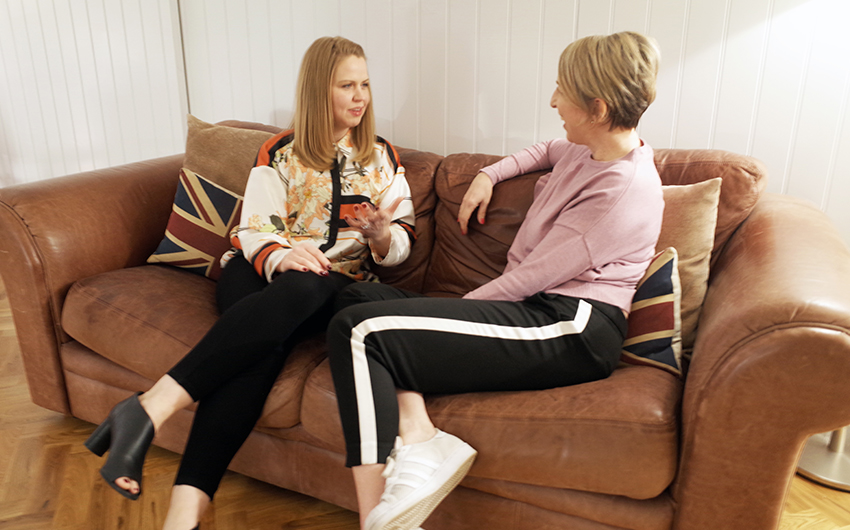
I’m a little giddy about this month’s interview. I’m delighted to be joined by copywriting expert/god/guru Andy Maslen, who’s also a well-known speaker, coach and author. During our conversation we discussed everything from Andy’s latest book and the future of copywriting to content mills and Andy’s goal-setting paperclip system!

We talked for a while. So part two of this interview is tomorrow.

Turner Ink: Hey Andy. Thanks for taking the time out to chat. I’ve just finished reading 100 Great Copywriting Ideas, which I found extremely useful. Your latest book, The Copywriting Sourcebook, has just hit the shelves. Tell us a bit about it.
Andy Maslen: Hey Sarah! Good to hear from you. The Copywriting Sourcebook came from a couple of places. One was me thinking back to my early days as a corporate marketing assistant. I had to write for loads of different formats – as I still do – from press releases and exhibition materials to direct mail letters and press ads. I guess I was lucky we didn’t have to write for the web back then – it would only have added to the stress!

Nobody could really tell me much so I spent a lot of time struggling to understand the requirements of the format itself before I could even attempt to write copy. I wanted to create a reference book that would give people lots of shortcuts – on structure, what to include, tone of voice and so on – for 12 formats from web pages to case studies. In an early attempt at coming up with a title with the publishers, we tossed around the idea of Copywriting SatNav. You plug in your destination and the book takes you there by the quickest route.

TI: So it differs quite a bit from your first book Write to Sell?
AM: Yes. In Write to Sell, I wrote a lot about the techniques and principles of good copywriting, but didn’t really give many real-world examples. Both 100 Great Copywriting Ideas and The Copywriting Sourcebook provide examples of actual working copy.

TI: So who’s the Sourcebook aimed at Andy? Other copywriters? Or those people that get dumped with ‘writing words’ as part of their jobs?
AM: It’s aimed at anyone who writes copy, from ‘dumpees’ to pros, but there are three main audiences. In-house copywriters and marketers. Freelancers who maybe want to get someone else’s take on the jobs they write every day. And entrepreneurs who have started a business and need to write copy for their website and offline marketing materials.

TI: I know you’re a busy copywriter, coach and speaker. So how do you find the time to write books as well?
AM: I’m lucky in that I can write fast when I’ve got something to say. When I’ve got a book on the go I set a daily word target, which is the agreed word count for the final book divided by the number of working days till the manuscript submission deadline. Then I put five paper clips on my monitor every Monday morning and put one back in the box for each day I hit my target.

TI: In Write to Sell, you have a useful toolkit for stimulating creative juices (which is stuck to my wall, by the way!). Do you still have times when the words don’t flow? What do you do to get going? Do you use your own toolkit?
AM: I do have moments when it all feels like a grind, but thankfully, the older I get the fewer those times are. I think that’s a product of having a deeper well of past projects and ideas to draw from. I do use my own toolkit – it’s a real list! (And I’m really flattered you have it pinned to your wall!) What works best for me is walking in the garden, and exercise.

TI: Lately we’ve seen the rise of certain sites where you can buy web content for as little as £6 a page. Where does that leave professional copywriters like us Andy?
AM: It leaves us exactly where we were before, writing intelligent, responsive copy for our clients. It’s not in competition. It’s there to a do a different job, which as far as I can see is some very mechanistic SEO ratings improvement. I don’t even believe it will last, as Google is smart enough not be gamed by these tactics.

TI: But do clients recognise quality writing any more?
AM: I think some clients recognise quality writing … and some don’t. You just have to choose who you’re going to work for! I have clients who would give you the bum’s rush if you quoted £20 for a 500-word piece of copy. Others, I know, are dropping their regular writers in favour of the content mills. You can’t argue with that reasoning, you just have to move on and find other clients.

TI: So what’s the future of copywriting? And copywriters?
AM: How long have you got! Here are a couple of predictions. One, it’s not going to go away. Every new technology gives rise to more written communication, not less. Just look at all the white papers, blogs and special reports about social media.

Two, the distinction between web copywriting and print copywriting will gradually disappear. Either because eventually all print media will disappear (unlikely) or because the technology will become so seamless that the focus will shift back to selling/influencing skills rather than PageRanks. Copywriters have a golden opportunity to raise their game – and their income. As more and more people start businesses, the market for copy will increase. But copywriters need to learn or polish some fundamental business skills, like price-setting, negotiating and selling.

TI: Yes, that an interesting point. Great writing skills are essential to being a good copywriter. But you need great business skills to run a successful copywriting business.
AM: That’s right.

TI: You and I chat on Twitter, Andy. What other social media channels do you use, if any?
AM: I use LinkedIn occasionally and now it’s linked to Twitter I like the cross-flow of ideas and readers between the two. I have a blog, which I have recently started posting to much more regularly, again powered by the Twitter effect of being able to tweet about longer and more involved blog posts. I’m on Facebook but very half-heartedly. Jo Kelly, our other copywriter is our Queen of Facebook!

TI: But with the onset of blogging, Twitter, Facebook, etc. do you think writing standards are slipping? Is it now more acceptable to have apostrophes in the wrong place and to write their instead of there?
AM: Writing standards are moving in every direction, all at once. Some people are getting better and better, some not. But what Twitter does is make bad writers more visible. I think the ease and speed of Twitter and the rest, particularly if you’re sending your tweets via your mobile, mean you’re less careful to proofread your stuff. I mean, who proofreads tweets anyway!? (I do – sad.)

TI: I do as well! I also punctuate my text messages.
AM: [Laughing] Well for me, it’s not acceptable to punctuate wrongly or break basic rules of composition, but clearly others feel differently! It does make me smile (ruefully) when I see tweets from professional writers that say “your” instead of “you’re”. Not much of an ad for your abilities, is it?

See part 2 of this interview tomorrow where Andy discusses his next book, his best project of all time (it involves Jeremy Clarkson!), and which company he’d really like to work for.

Bookmark and Share

What kids can teach us about search

2nd
Mar
by Sarah Turner

Me to my nephew Jack: What are you up to?

Jack: I’m just looking for something online

Me: What you looking for?

Jack: Some goal posts. I just put ‘goal posts’ into Google but I couldn’t find what I wanted.

Me: What are you after then?

Jack: Ones for the garden. Let me try ‘garden goal posts’. Nah. I wanted smaller ones than that. Let me try ‘pop up goal posts’.

Me: Oh there they are. Is that what you were looking for?

Jack: Hmm. They’re a bit expensive. Let me try searching for ‘cheap pop up goal posts’. Yes, these are the ones I want. DAAAAAAAAAD! Can I have your bank card please?

Jack knows that when you’re searching online, using a long tail key phrase will always get you what you want.

Jack is 8.

Bookmark and Share

‘My name is Sarah and I’m an email junkie’. The true story of email overload

24th
Feb
by Sarah Turner

I had a bit of a light bulb moment last week.

It was when I turned on my computer last Monday and saw I had 338 emails in my inbox.

Eeeek. How come so many? Well I don’t use RSS. So every blog update comes via email. And to be honest, I’ve been slack with my reading and filing. There were quite a few from clients of course. And the usual milions of updates from Amazon, Play, Sports Direct etc.

Immediately I felt under pressure. How long was it going to take me to get through this lot? A couple of hours? An afternoon? Whatever. It was time that could be better spent elsewhere.

And then it occurred to me: why the heck was I filing all these emails? I needed a new way of managing my inbox. And fast.

Help was immediately at hand.

One of the unopened emails was a blog post from Leo Babauta over at Zen Habits. When it comes to emails he suggests talking one of four actions:

1. Read and delete
2. Archive the stuff you want to look at later
3. Do a quick reply if you can do it in less than four sentences
4. Put it on a to-do list

He may have something there.

On Wednesday I met Rob Williams at a 4N networking event. He actually goes into companies and sets up their email systems. The trouble is that people still file emails like they’re using filing cabinets, he told me. So every piece of correspondence is saved, in folders, in alphabetical order.

He recommends dealing with emails like this:

1. Read and delete
2. Put in a folder to delegate
3. Put in a to-do folder
4. Put in an archive folder once dealt with

As Rob pointed out, there’s no need to create separate customer files, employee files, or project files. Just put all your emails in one archive file and use your search facility to find them. He told me some of his clients now have an extra hour a day which had been previously spent filing emails.

Wow.

My conversation with Rob was closely followed by two great posts I read at the end of last week: Merlin’s 5-step method for Managing your Inbox by Dean Rieck at Pro Copy Tips. And Email is Killing your Business by Michael Leis.

The guys above had given me some great tips on inbox management. Now I needed to go cold turkey.  

Checking all the folders on my PC I discovered the embarrassing truth: I have filed EVERY single email I have ever received from the likes of Ittybiz, Copyblogger, Search Engine Land, Chris Brogan and Daily Blog Tips. And I’ve filed them all in folders helpfully named, Ittybiz, Copyblogger, Search Engine Land, Chris Brogan and Daily Blog Tips. There were hundreds and hundreds of emails. I’d just got into the habit of reading and filing. Reading and filing. Reading and filing. And sometimes I hadn’t even read or filed. Hence the 338 emails now sitting in my inbox.

And here’s the joke. Have I ever gone back to the Copyblogger folder and looked for a particular email? Nope. I’ve just gone to the Copyblogger site and searched for it. Same with Ittybiz. On the rare occasion I couldn’t find a particular post I emailed Naomi directly and she emailed me back with the link.

And that was just emails from the bloggers I follow. How about client folders? There were hundreds of them as well. Every email carefully filed away with important stuff like ‘See you on Thursday at 12.30pm.’ Or ‘I’m away on Monday June 11th 2007 so can you email the copy to my marketing assistant?’

Crazy.

So what am I doing about it?

Since last Friday, every email that gets filed needs to meet the following criteria: it needs to contain information which helps me be a better copywriter. Or it needs to contain information which might be useful for a future blog post. If it doesn’t, it gets deleted. So that means all the emails from Mashable about the Apple iPad are going in the trash.

And I’ve started getting rid of all those client folders and their contents. I’m keeping a couple of important emails: the ones that say ‘we love what you’ve written’ and ‘please invoice us now’. Actually, they can probably go as well.

I’ve unsubscribed from Amazon et al.

And I’m going to use Skype text wherever possible, so I’m not clogging up someone else’s inbox. 

I’m aiming for minimal filing and a zero inbox.

Oh and if this blog post ends up in your inbox, read it – then delete it.


Got any tips for managing your inbox? Please share in the comments.

Bookmark and Share
 

Definition of a blog: A blog or web blog is a website usually maintained by an individual with regular entries of commentary, descriptions of events, or other material such as graphics or video. (Wikipedia.com)